
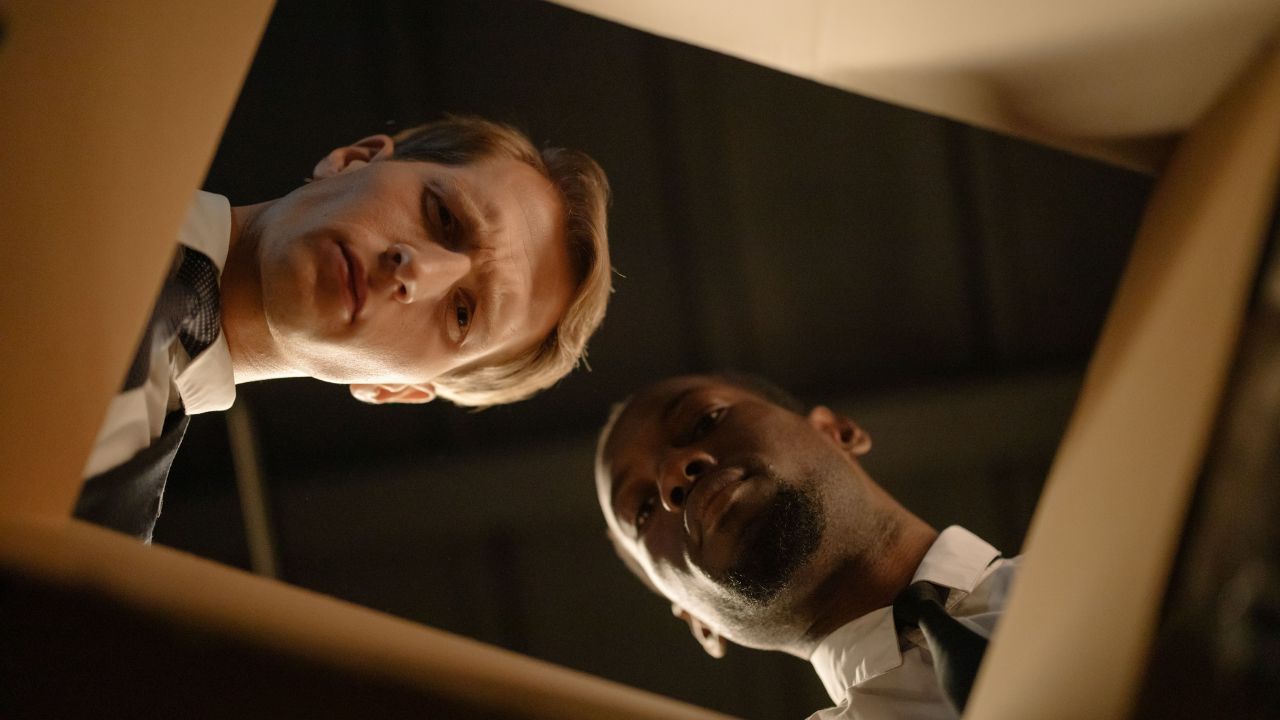
The modern workplace is often terrifying. It features endless emails, grey cubicles, and corporate buzzwords. However, no television show captures corporate dread quite like Apple TV’s psychological thriller series. After a long three-year wait, the show returns to its bleak world. Fans have waited anxiously since the massive cliffhanger ending of the first season. The big question remains clear: Can the new season match the brilliant storytelling of its debut?
This extensive review explores the narrative depths, visual styles, and character arcs of the latest season. We will look closely at how the show expands its unique premise. It continues to deliver a chilling critique of modern work culture. It remains highly entertaining.
The Plot Expands Inside and Outside Lumon Industries
The first season introduced us to the concept of surgical separation. This biotechnology process splits a person’s memories between their work life and personal life. The work self is called an “innie.” The home self is called an “outie.” The first season ended with a thrilling climax. The inner identities of the main characters managed to wake up in the outside world. They discovered shocking truths about their true lives.
+—————————————————————–+
| LUMON INDUSTRIES |
| [ Innie Identity ] <— severed —> [ Outie Identity ] |
| Trapped in Basement Lives Outside |
| No Outside Memories No Work Memories |
+—————————————————————–+
The second season starts right where that tension left off. The narrative scope is now much larger. We no longer spend all our time in the stark white corridors of the Macrodata Refinement floor. The story explores the deep history of the mysterious corporate entity. It tracks the global influence of the company. The writers do not hit the reset button. Instead, they make the consequences of the rebellion immediate and harsh.
The inner office workers must face severe corporate punishments. Meanwhile, their outer selves try to process the strange fragments of information they learned in the wild season one finale. This dual narrative structure keeps the tension very high. Every episode moves back and forth between corporate horror and a tense conspiracy thriller.
Quick Overview of the Story Structure
| Narrative Element | Season 1 Focus | Season 2 Expansion |
| Primary Setting | The office floor | Global corporate operations |
| Main Conflict | Escaping the office basement | Uncovering the global conspiracy |
| Mystery Focus | The nature of the work | The company’s origins and history |
| Character State | Complete separation | Blurring lines between identities |
Exceptional Performances Drive the New Season
The high quality of this television series rests on the shoulders of its exceptional cast. The actors must essentially play two different versions of the same individual. They handle this difficult task with amazing skill.
Mark Scout’s Emotional Conflict
Adam Scott returns as the lead character, Mark Scout. He delivers a beautifully subtle performance. His outer character spends the season trying to understand the strange actions of his office self. At the same time, his inner identity deals with a heartbreaking truth. He now knows that his deceased wife is actually alive inside the office building as the mysterious wellness counselor. The actor displays grief and confusion using small facial movements. He can shift his entire mood with just a slight change in his physical posture.
Helly R and Identity Confusion
Britt Lower gives another breakout performance. Her character, Helly R, discovers that her outer self is actually a member of the powerful corporate family that runs the entire operation. This realization creates a fascinating conflict. Her inner self hates the company completely. Yet, she must face the fact that she chose this nightmare for herself. The actress portrays this internal rage and identity confusion brilliantly. She shows the sharp contrast between her rebellious inner self and her cold outer self.
Strong Supporting Cast Members
The rest of the main office team keeps the story grounded and realistic. Zach Cherry brings great moments of dry corporate comedy. At the same time, he shows a deep sadness as he realizes his inner self has a child in the outside world. John Turturro gives a moving performance. His character searches for the truth about his close connection with an office colleague.
The corporate villains remain deeply unsettling. Tramell Tillman shines as the smiling but dangerous office manager. Patricia Arquette is absolutely terrifying. She plays the strict corporate boss who is deeply devoted to the company’s strange philosophy.
Major Character Dynamics and Key Actor Roles
| Actor Name | Character Played | Main Motivation in the Story |
| Adam Scott | Mark Scout | Searching for the truth about his wife |
| Britt Lower | Helly R | Fighting her own corporate family |
| John Turturro | Irving Bailiff | Locating a missing romantic connection |
| Patricia Arquette | Harmony Cobel | Protecting the company’s secrets |
| Tramell Tillman | Mr. Milchick | Maintaining absolute order in the office |
Direction, Style, and Pacing Elements
Ben Stiller continues to direct a majority of the episodes. He establishes a very specific visual style for the show. The direction uses symmetry, wide empty spaces, and clean lines. This visual choice makes the office look like a beautiful but terrifying maze. The camera movements are slow and deliberate. This style creates a feeling of quiet panic that builds up slowly over time.
+——————————————————–+
| VISUAL STYLE |
| [Symmetry] —-> Creates a sense of order and trap |
| [Wide Angles] -> Emphasizes isolation of characters |
| [Minimalism] –> Removes human warmth from the office |
+——————————————————–+
The pacing of the new season is quite deliberate. It chooses to build tension slowly rather than offering cheap thrills. Some viewers might feel the middle episodes take too much time to explain the background lore. However, this slow buildup is necessary. It makes the major plot twists feel earned. The show works best when it allows viewers to think about the mysteries. It does not rush through the plot points. It rewards patient watchers.
The strange corporate music helps build this atmosphere. The simple piano tunes and sudden loud notes make everyday office sounds feel like a threat.
A Brilliant Critique of Corporate Culture
At its core, the series is a sharp satire of modern employment. The new episodes dive deeper into how companies try to own the minds and bodies of their workers. The company acts like a religious cult. It has its own holy books, statues of past leaders, and strange reward systems. Workers receive cheap items like finger traps, dynamic music experiences, or waffle dinners for hitting their work targets.
“The show highlights a
The modern workplace is often terrifying. It features endless emails, grey cubicles, and corporate buzzwords. However, no television show captures corporate dread quite like Apple TV’s psychological thriller series. After a long three-year wait, the show returns to its bleak world. Fans have waited anxiously since the massive cliffhanger ending of the first season. The big question remains clear: Can the new season match the brilliant storytelling of its debut?
This extensive review explores the narrative depths, visual styles, and character arcs of the latest season. We will look closely at how the show expands its unique premise. It continues to deliver a chilling critique of modern work culture. It remains highly entertaining.
The Plot Expands Inside and Outside Lumon Industries
The first season introduced us to the concept of surgical separation. This biotechnology process splits a person’s memories between their work life and personal life. The work self is called an “innie.” The home self is called an “outie.” The first season ended with a thrilling climax. The inner identities of the main characters managed to wake up in the outside world. They discovered shocking truths about their true lives.
+—————————————————————–+
| LUMON INDUSTRIES |
| [ Innie Identity ] <— severed —> [ Outie Identity ] |
| Trapped in Basement Lives Outside |
| No Outside Memories No Work Memories |
+—————————————————————–+
The second season starts right where that tension left off. The narrative scope is now much larger. We no longer spend all our time in the stark white corridors of the Macrodata Refinement floor. The story explores the deep history of the mysterious corporate entity. It tracks the global influence of the company. The writers do not hit the reset button. Instead, they make the consequences of the rebellion immediate and harsh.
The inner office workers must face severe corporate punishments. Meanwhile, their outer selves try to process the strange fragments of information they learned in the wild season one finale. This dual narrative structure keeps the tension very high. Every episode moves back and forth between corporate horror and a tense conspiracy thriller.
Quick Overview of the Story Structure
| Narrative Element | Season 1 Focus | Season 2 Expansion |
| Primary Setting | The office floor | Global corporate operations |
| Main Conflict | Escaping the office basement | Uncovering the global conspiracy |
| Mystery Focus | The nature of the work | The company’s origins and history |
| Character State | Complete separation | Blurring lines between identities |
Exceptional Performances Drive the New Season
The high quality of this television series rests on the shoulders of its exceptional cast. The actors must essentially play two different versions of the same individual. They handle this difficult task with amazing skill.
Mark Scout’s Emotional Conflict
Adam Scott returns as the lead character, Mark Scout. He delivers a beautifully subtle performance. His outer character spends the season trying to understand the strange actions of his office self. At the same time, his inner identity deals with a heartbreaking truth. He now knows that his deceased wife is actually alive inside the office building as the mysterious wellness counselor. The actor displays grief and confusion using small facial movements. He can shift his entire mood with just a slight change in his physical posture.
Helly R and Identity Confusion
Britt Lower gives another breakout performance. Her character, Helly R, discovers that her outer self is actually a member of the powerful corporate family that runs the entire operation. This realization creates a fascinating conflict. Her inner self hates the company completely. Yet, she must face the fact that she chose this nightmare for herself. The actress portrays this internal rage and identity confusion brilliantly. She shows the sharp contrast between her rebellious inner self and her cold outer self.
Strong Supporting Cast Members
The rest of the main office team keeps the story grounded and realistic. Zach Cherry brings great moments of dry corporate comedy. At the same time, he shows a deep sadness as he realizes his inner self has a child in the outside world. John Turturro gives a moving performance. His character searches for the truth about his close connection with an office colleague.
The corporate villains remain deeply unsettling. Tramell Tillman shines as the smiling but dangerous office manager. Patricia Arquette is absolutely terrifying. She plays the strict corporate boss who is deeply devoted to the company’s strange philosophy.
Major Character Dynamics and Key Actor Roles
| Actor Name | Character Played | Main Motivation in the Story |
| Adam Scott | Mark Scout | Searching for the truth about his wife |
| Britt Lower | Helly R | Fighting her own corporate family |
| John Turturro | Irving Bailiff | Locating a missing romantic connection |
| Patricia Arquette | Harmony Cobel | Protecting the company’s secrets |
| Tramell Tillman | Mr. Milchick | Maintaining absolute order in the office |
Direction, Style, and Pacing Elements
Ben Stiller continues to direct a majority of the episodes. He establishes a very specific visual style for the show. The direction uses symmetry, wide empty spaces, and clean lines. This visual choice makes the office look like a beautiful but terrifying maze. The camera movements are slow and deliberate. This style creates a feeling of quiet panic that builds up slowly over time.
+——————————————————–+
| VISUAL STYLE |
| [Symmetry] —-> Creates a sense of order and trap |
| [Wide Angles] -> Emphasizes isolation of characters |
| [Minimalism] –> Removes human warmth from the office |
+——————————————————–+
The pacing of the new season is quite deliberate. It chooses to build tension slowly rather than offering cheap thrills. Some viewers might feel the middle episodes take too much time to explain the background lore. However, this slow buildup is necessary. It makes the major plot twists feel earned. The show works best when it allows viewers to think about the mysteries. It does not rush through the plot points. It rewards patient watchers.
The strange corporate music helps build this atmosphere. The simple piano tunes and sudden loud notes make everyday office sounds feel like a threat.
A Brilliant Critique of Corporate Culture
At its core, the series is a sharp satire of modern employment. The new episodes dive deeper into how companies try to own the minds and bodies of their workers. The company acts like a religious cult. It has its own holy books, statues of past leaders, and strange reward systems. Workers receive cheap items like finger traps, dynamic music experiences, or waffle dinners for hitting their work targets.
“The show highlights a disturbing truth: many modern businesses would gladly take your entire life if you let them.”
The show explores how people try to keep their work lives and personal lives separate. It suggests that trying to split yourself into two different people is harmful. Your real traumas and feelings will always find a way to leak through the corporate walls. This message makes the show more than just a standard science fiction mystery. It serves as a powerful mirror reflecting our current work culture.
Corporate Control Elements Found in the Show
| Control Method | Office Function | Real-World Workplace Equivalent |
| Memory Splitting | Erasing outside life | Expecting constant availability |
| Praise Perks | Waffle dinners and toys | Cheap perks instead of fair pay |
| The Break Room | Psychological torture | Aggressive performance reviews |
| Corporate Lore | Worshipping the founders | Extreme corporate branding |
Technical Merits: Production Design and Sound
The technical aspects of the show are flawless. The production design creates a highly memorable space. The bright green computer screens, dark wood desks, and endless white walls look both retro and futuristic. This unique design gives the show a timeless quality. It makes the setting feel completely separated from normal reality.
+——————————————————–+
| PRODUCTION DESIGN |
| Green Screens <—> Retro 1980s Computer Technology |
| White Walls <—> Modern Minimalist Office Spaces |
| Dark Desks <—> Mid-Century Corporate Aesthetic |
+——————————————————–+
The sound design is equally impressive. The quiet hum of office lights and the clicking of keyboards sound loud and heavy. The show uses silence effectively. The complete lack of sound during tense moments creates a strong feeling of isolation. The editing is also very sharp. It cuts cleanly between the bright office and the dark outside world. This visual contrast helps viewers instantly know which identity they are watching.
FAQs About the New Season
Is the second season as good as the first season?
Yes. While it has a slightly different feel and spends more time explaining the world, it keeps the high quality, tension, and acting standards that made the first season a success.
How many episodes are in the new season?
The second season consists of 10 episodes. This is one extra episode compared to the nine-episode run of the first season.
Do we get real answers to the big mysteries?
The show explains several major mysteries regarding the company history and the backgrounds of the characters. However, it also introduces new questions to keep the overarching story engaging.
Can I watch this season without seeing the first one?
No. The narrative is highly complex and continuous. You must watch the first season to understand the characters, their relationships, and the central mystery.
Final Words
The new season avoids the sophomore slump completely. It expands its world without losing the unique style that made it special. It features incredible acting, stunning visual design, and a smart story. The show remains one of the best programs on television. It will leave you thinking deeply about your own relationship with work long after the final credits roll.
: many modern businesses would gladly take your entire life if you let them.”
The show explores how people try to keep their work lives and personal lives separate. It suggests that trying to split yourself into two different people is harmful. Your real traumas and feelings will always find a way to leak through the corporate walls. This message makes the show more than just a standard science fiction mystery. It serves as a powerful mirror reflecting our current work culture.
Corporate Control Elements Found in the Show
| Control Method | Office Function | Real-World Workplace Equivalent |
| Memory Splitting | Erasing outside life | Expecting constant availability |
| Praise Perks | Waffle dinners and toys | Cheap perks instead of fair pay |
| The Break Room | Psychological torture | Aggressive performance reviews |
| Corporate Lore | Worshipping the founders | Extreme corporate branding |
Technical Merits: Production Design and Sound
The technical aspects of the show are flawless. The production design creates a highly memorable space. The bright green computer screens, dark wood desks, and endless white walls look both retro and futuristic. This unique design gives the show a timeless quality. It makes the setting feel completely separated from normal reality.
+——————————————————–+
| PRODUCTION DESIGN |
| Green Screens <—> Retro 1980s Computer Technology |
| White Walls <—> Modern Minimalist Office Spaces |
| Dark Desks <—> Mid-Century Corporate Aesthetic |
+——————————————————–+
The sound design is equally impressive. The quiet hum of office lights and the clicking of keyboards sound loud and heavy. The show uses silence effectively. The complete lack of sound during tense moments creates a strong feeling of isolation. The editing is also very sharp. It cuts cleanly between the bright office and the dark outside world. This visual contrast helps viewers instantly know which identity they are watching.
FAQs About the New Season
Is the second season as good as the first season?
Yes. While it has a slightly different feel and spends more time explaining the world, it keeps the high quality, tension, and acting standards that made the first season a success.
How many episodes are in the new season?
The second season consists of 10 episodes. This is one extra episode compared to the nine-episode run of the first season.
Do we get real answers to the big mysteries?
The show explains several major mysteries regarding the company history and the backgrounds of the characters. However, it also introduces new questions to keep the overarching story engaging.
Can I watch this season without seeing the first one?
No. The narrative is highly complex and continuous. You must watch the first season to understand the characters, their relationships, and the central mystery.
Final Words
The new season avoids the sophomore slump completely. It expands its world without losing the unique style that made it special. It features incredible acting, stunning visual design, and a smart story. The show remains one of the best programs on television. It will leave you thinking deeply about your own relationship with work long after the final credits roll.