Can a hard sci-fi novel about astrophysics, quantum mechanics, and a slow-motion alien invasion actually work as a mainstream streaming hit? That is the massive question behind David Benioff, D.B. Weiss, and Alexander Woo’s latest big-budget project. In this 3 Body Problem Netflix Review: Complete Breakdown, we will dive deep into how the creators of Game of Thrones tackled Cixin Liu’s famously complex trilogy to deliver a mind-bending television experience.
The series attempts a difficult balancing act. It wants to satisfy hardcore sci-fi purists while remaining accessible to casual viewers who just want a thrilling weekend binge. By shifting the story’s setting, combining characters, and visualizing abstract theoretical physics, the show turns a dense academic text into a fast-paced thriller. Let’s break down exactly what works, what fails, and whether this ambitious adaptation deserves a spot on your watchlist.
Why This Sci-Fi Adaptation Matters
Adapting Hugo Award-winning science fiction is notoriously risky. Cixin Liu’s original novel relies heavily on internal monologues, deep mathematical theories, and a distinctively cold, philosophical perspective on human nature. Previous attempts to bring this story to the screen often struggled with the sheer scale of the narrative. Netflix invested massive resources into this production, making it a critical litmus test for high-concept sci-fi on television.
Furthermore, the creative team carries heavy expectations. Showrunners Benioff and Weiss are under intense scrutiny following the controversial ending of Game of Thrones. With this project, they prove their talent for translating dense source material into gripping, character-driven television drama. They ground the high-concept physics in real human emotion, giving the audience a clear stake in the looming cosmic conflict.
3 Body Problem Netflix Review: Complete Breakdown — The Core Elements
To understand how this massive narrative functions, we need to analyze its structural pillars. Here is a breakdown of the key elements that define the first season of the series.
Overview of the Adaptation
| Element | Description | Impact on the Show |
| Source Material | The Three-Body Problem by Cixin Liu | Provides a rich, complex foundation of hard science fiction. |
| Setting Shift | From modern-day China to contemporary London | Makes the story globally accessible but alters the original cultural atmosphere. |
| Character Rework | The “Oxford Five” replace single protagonists | Creates dynamic interpersonal relationships and better dialogue opportunities. |
| Visual Style | High-budget CGI blended with gritty realism | Successfully illustrates complex ideas like VR worlds and multi-dimensional folds. |
Top 5 Key Takeaways From the Show
Item #1: Introducing the “Oxford Five”
In the original book, Wang Miao serves as the primary lens for the audience, but he lacks a distinct emotional drive. The Netflix adaptation solves this by splitting his role among five young scientists dubbed the “Oxford Five.”
This group includes Jin Cheng (the brilliant theoretical physicist), Auggie Salazar (the pioneer of nanotechnology), Saul Durand (the unfulfilled genius), Jack Rooney (the millionaire dropout), and Will Downing (the terminally ill physics teacher). By turning a solitary journey into a collective group dynamic, the show adds genuine stakes to the story. We care about the survival of these characters because we see their history, their romances, and their loyalty to one another.
| Character | Role in the Group | Narrative Purpose |
| Jin Cheng | The Analytical Genius | Drives the core scientific discoveries and enters the VR game. |
| Auggie Salazar | The Practical Engineer | Creates the nanotech that serves as a crucial plot device. |
| Saul Durand | The Reluctant Thinker | Represents the audience’s skepticism and hidden human potential. |
| Will Downing | The Emotional Core | Provides the tragic, human heart of the late-season arc. |
Item #2: Visualizing Complex Scientific Theories
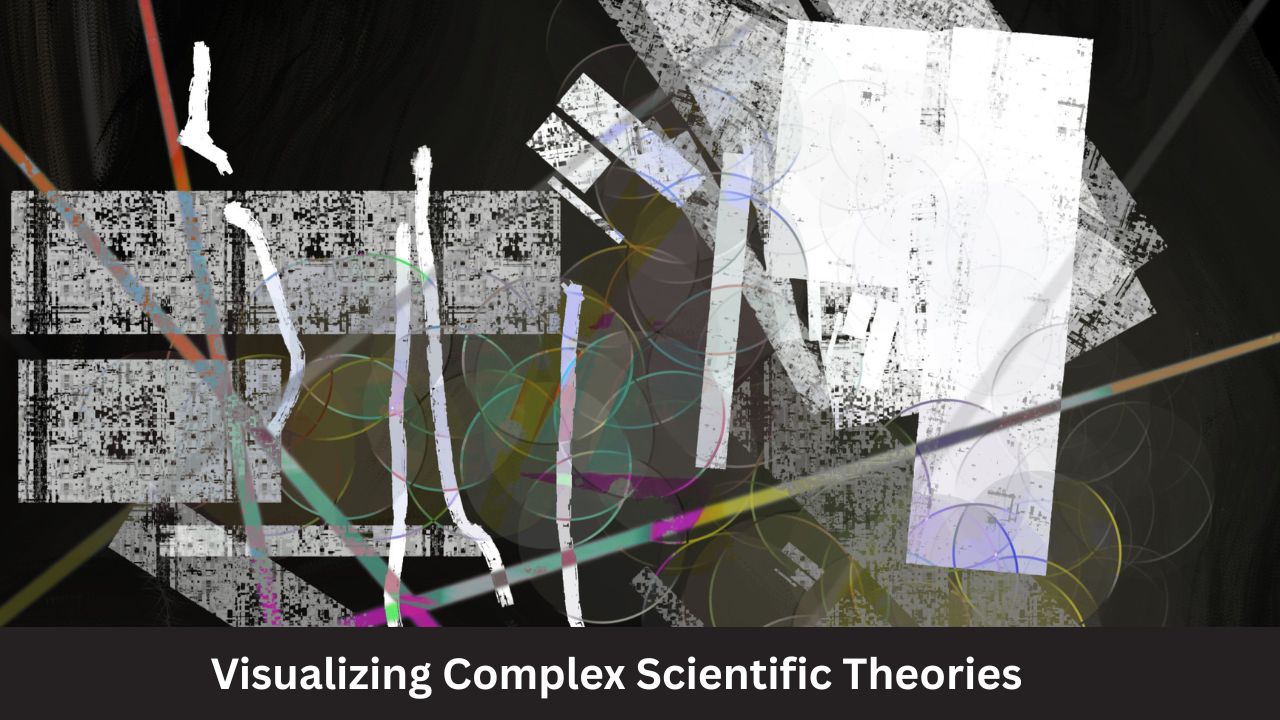
How do you show a countdown timer burned directly into someone’s retinas, or a universe blinking in Morse code? The series handles these abstract visual challenges with incredible creativity.
The standout visual element is the silver, futuristic virtual reality headset. When the characters put it on, they enter a highly detailed digital landscape designed by an alien intelligence to explain their dying home planet. The show handles these complex scenes beautifully, using spectacular CGI to explain the chaotic physics of a three-star solar system without boring the viewer with academic lectures.
| Visual Sequence | Creative Execution | Impact |
| The Retinal Countdown | A glowing digital timer overlaying real-world sight | Creates a constant, claustrophobic sense of dread. |
| The VR Game Worlds | Photorealistic historical environments with strange physics | Simplifies complex orbital mechanics through imagery. |
| The Universe Blinking | The night sky dims and brightens in a rhythmic pattern | Establishes the terrifying scale of the alien technology. |
Item #3: The Judgment Day and the “Judgment” Scene
Without spoiling the exact mechanics, the sequence involving the massive canal ship named Judgment Day is one of the most shocking moments of television in recent memory. It perfectly demonstrates the cold, brutal realities of high-tech warfare.
Using the nanotechnology introduced early in the season, the sequence is filmed with a detached, clinical precision that makes it deeply unsettling. It highlights the show’s dark philosophical underpinnings: when humanity is pushed to the brink of extinction, our methods for survival become terrifyingly ruthless. It is a masterclass in tension, special effects, and sound design.
| Key Aspect | Production Detail | Audience Impact |
| Technology Used | Ultra-thin, invisible nanomaterial filaments | Shows the horrific destructive potential of clean science. |
| Directorial Style | Slow, lingering shots in bright daylight | Heightens the horror by avoiding typical dark, cinematic lighting. |
| Moral Ambiguity | Executed by the “heroes” to secure vital data | Forces the viewer to question the cost of saving humanity. |
Item #4: Benedict Wong and Liam Cunningham’s Dynamic
While the young scientists form the emotional core, the seasoned veterans Da Shi (Benedict Wong) and Thomas Wade (Liam Cunningham) anchor the show’s espionage thriller elements.
Wong plays a rumpled, cynical intelligence operative with a hidden heart, while Cunningham plays a cold, ruthlessly efficient commander running a secret global defense initiative. Their chemistry provides much-needed dark humor and grounded realism. They represent the practical, messy side of humanity that refuses to back down, even when facing an adversary that views humans as mere insects.
| Character | Strengths | Strategic Role |
| Da Shi | Street smarts, sharp intuition, deep loyalty | Investigates ground-level conspiracies and protects the scientists. |
| Thomas Wade | Unshakeable will, absolute authority, pragmatism | Commands global resources to build humanity’s defense plan. |
Item #5: The Sophon Threat and Cosmic Paranoia
The true antagonist of the series isn’t an alien fleet you can shoot down, but rather the “Sophons”—proton-sized supercomputers sent ahead by the aliens to halt human scientific progress.
This concept introduces an element of psychological horror to the sci-fi plot. Because the Sophons can see and hear everything on Earth, humanity has zero privacy. They sabotage particle accelerators, corrupt scientific data, and render advanced research impossible. The show brilliantly captures the resulting paranoia, forcing world leaders and scientists to figure out how to plan a war when the enemy is actively reading their minds.
| Enemy Asset | Capabilities | Strategic Impact on Earth |
| The San-Ti Fleet | Traveling across space, arriving in 400 years | Creates a long-term existential dread rather than immediate doom. |
| The Sophons | Omnipresent surveillance, manipulation of digital data | Completely halts human technological advancement overnight. |
The Ultimate Verdict: Hits and Misses
No ambitious adaptation is perfect, and this series has distinct strengths and weaknesses that emerge over its eight-episode run.
What Works Perfectly
- Streamlined Logic: The complex physics theories are broken down into digestible, highly visual metaphors that never derail the story’s momentum.
- Excellent Ensemble Cast: The chemistry between the main actors makes abstract concepts feel personally meaningful.
- Uncompromising Scale: The series preserves the vast, terrifying scale of the universe, embracing the bleak cosmic pessimism of the books.
What Falls Short
- Rushed Character Arcs: Shifting the narrative location means some relationship dynamics feel forced or accelerated to fit the eight-episode structure.
- Loss of Cultural Nuance: Moving the primary action away from China diminishes some of the unique historical context that gave the original novel its distinct identity.
Uncommon FAQs
What exactly is the “Three-Body Problem” in real physics?
It is a real, unresolved problem in classical mechanics. When three celestial bodies (like stars or planets) orbit one another, their mutual gravitational pull creates a chaotic system. Unlike a two-body system (like the Earth and the Moon), their paths cannot be predicted mathematically using a simple formula. In the show, the alien race lives in a solar system with three suns, causing their planet to alternate between eras of extreme heat, freezing cold, and complete gravitational chaos.
Why did the show switch the setting from China to London?
The showrunners wanted to emphasize that an alien invasion is a global crisis, not a regional one. By creating an international group of scientists based in London, the series appeals to a broader global audience while allowing for a more diverse cast. However, the foundational flashbacks to the Chinese Cultural Revolution remain intact, preserving the critical historical catalyst for the entire plot.
Can the San-Ti read human thoughts?
No. The San-Ti communicate through direct thought transmission, meaning deceit is completely foreign to them. Because human thoughts are private and separate from our spoken words, the aliens are deeply terrified of our capacity for lying, deception, and strategic trickery. This cognitive difference becomes humanity’s primary advantage in the upcoming conflict.
Will there be a second season of the Netflix series?
Yes. Netflix officially renewed the show to continue the adaptation of Cixin Liu’s trilogy. The upcoming episodes will tackle the second book, The Dark Forest, focusing on how humanity develops hidden, deceptive strategies to counter the omnipresent surveillance of the Sophons.
Conclusion
To wrap up this 3 Body Problem Netflix Review: Complete Breakdown, this series stands as a highly impressive, incredibly bold attempt to bring massive science fiction to a mainstream audience. It successfully strips away the dry, dense academic prose of the source material without losing the terrifying cosmic ideas that made the book a masterpiece. By focusing heavily on human relationships and providing top-tier visual effects, the showrunners have crafted a smart, gripping thriller that will leave you staring up at the night sky with a deep sense of unease.
If you appreciate television that challenges your intellect while delivering high-stakes suspense, this adaptation is absolutely worth your time. Strap in, pay close attention to the science, and prepare yourself for a truly unique cosmic journey.